
Broker Fee Dilemma

marcus • March 9, 2024

Balancing National Concerns with Colorado Real Estate Agents' Insights

A cross in the middle of a field with a sunset in the background.

A jury trial currently in session in Kansas City, MO, is poised to challenge a fundamental aspect of the U.S. real estate market — broker fees.

**REPUBLISHED FROM 2023 Article on WWW.CICOLORADO.COM

National Scenario:

This trial, part of two antitrust class-action lawsuits against top-tier brokerage firms and the National Association of Realtors (NAR), threatens to unsettle the established trade group’s influence on the industry, potentially altering the way Americans purchase homes.


Two implicated parties, Anywhere Realty and Re/Max, have already resolved both suits, diminishing their ties with the NAR and compensating a total of $139 million in damages. Parallelly, the Department of Justice is reportedly mulling over antitrust action against the NAR, as reported by Bloomberg.


The Core Debate:

At the heart of the matter are broker fees, especially the payment from the seller to the buyer’s agent.


Per NAR guidelines, which agents must comply with to access the majority of local real estate databases, the seller foots the fee, which is then shared between the seller’s and buyer’s real estate agents. In these listings, a fee offer from sellers is mandatory (even if it’s zero) — discernible to buyers’ agents, albeit typically not to the prospective buyers.


Representing the sellers of over 260,000 homes in Missouri, Kansas, and Illinois, the plaintiffs argue this system essentially orchestrates a conspiracy to sustain high home prices.


By The Numbers:

In 2020, Americans expended over $85 billion on residential real estate commissions, highlighted by the DOJ during a preceding antitrust scrutiny.


While the NAR recently indicated the fee could dip to $0, studies manifest that the fees predominantly remain steady. The commission structure equates to “collusion,” the lead plaintiff attorney in the Missouri case conveyed to Bloomberg.


Broader Outlook:

Critics have long chastised the NAR and this system for boosting home prices — thereby misaligning the objectives of the buyer and their agent.


Agents garner more if the buyer disburses more. “From a consumer angle, the industry lacks logic,” commented Steve Brobeck, a senior fellow at the Consumer Federation of America, who has delved into this issue extensively.


Brobeck draws a comparison between the broker fee on a $500,000 house, which would be $30,000, to the price of a car. “It’s astonishing.”


Digital Shifts:

The internet has revolutionized nearly every marketplace across the nation, generally driving down costs — like enabling zero-fee stock trading.


Similarly, home-buying has evolved with the internet: Prospective buyers now browse online listings and might not engage a broker until they pinpoint a specific home. Yet, despite the boom in online listings since the mid-aughts, fees remain static — averaging about 5%, as per data from Housing Wire.


The Other Side:

In a communication to Axios, an NAR representative defended its rules and system, asserting they benefit both consumers and the market. They emphasized that “compensation is always negotiable,” and commissions vary with the market.


Arguing against rule amendments, they claim such changes “would endanger consumers’ equal access to homes for sale, affordability, and the overall stability of the housing market,” referencing a paper by a George Washington University business school professor and a fellow at the Urban Institute.


NAR’s Rebuttal:

In a communication to Axios, an NAR representative defended its rules and system, positing they benefit both consumers and the market. They underscored that “compensation is always negotiable,” and commissions vary with the market.


Arguing against modifying the rules, they assert such changes “would endanger consumers’ equal access to homes for sale, affordability, and the overall stability of the housing market,” referencing a paper by a George Washington University business school professor and a fellow at the Urban Institute.


In Colorado:

The discussion around broker fees is crucial as it directly ties to how real estate agents earn their living. In Colorado, the typical realtor fees hover around 5.52%, slightly above the national average of 5.37%​1​. How these fees are structured can impact an agent’s earnings significantly.


Let’s break down how it works: say a house sells for $500,000 with a 5.52% commission fee. That’s $27,600, which gets split among the listing agent, buyer’s agent, and their respective brokerages. Now, within this split, an agent’s share can vary. Some agents in Colorado may pay a flat fee per closing to their brokerage, while others might part with a substantial chunk of their commission, sometimes more than half​2​.


Looking Ahead:

The legal discussions and potential changes in broker fee structures are something every agent is likely watching closely. Any shifts could mean re-evaluating their business models to continue providing value to their clients while ensuring a fair earning.


In essence, the broker fee discussions aren’t just legal or industry debates; they’re about the livelihoods of real estate agents, their ability to serve clients effectively, and the overall health and competitiveness of the real estate market in places like Colorado and beyond.

A man and a woman are sitting on a couch looking at papers.
By marcus March 9, 2024
Tips to Avoid Foreclosure Dread lingers in the hearts of homeowners facing the specter of foreclosure. When the ability to meet mortgage payments falters, lenders resort to drastic measures, seizing ownership and selling cherished homes. In this article, we provide essential tips to help you prevent foreclosure, safeguard your home, and preserve your financial well-being. Understanding Your Mortgage Rights and Taking Preventive Measures When the burden of impending mortgage payments looms over you, understanding the nuances of foreclosure laws becomes paramount. Each state has its own regulations and timeframes governing foreclosure. To equip yourself with vital information and avoid unexpected setbacks, follow these steps: Delve into your mortgage contract: Take the time to carefully read and comprehend the terms and conditions outlined in your mortgage agreement, particularly those related to foreclosure. Understanding your rights and obligations empowers you to make informed decisions. Seek guidance from State Government Housing: Reach out to the relevant department or agency within your state government specializing in housing matters. Consult them with any questions or concerns regarding foreclosure laws and regulations specific to your situation. Their expertise will provide valuable insights. Establish Open Communication with Your Lender: Maintaining a proactive line of communication with your mortgage lender is crucial in avoiding unpleasant surprises. Keep them informed about your financial difficulties and explore potential alternatives or assistance programs available to help you navigate through challenging times. Familiarize yourself with relevant laws and potential penalties: Educate yourself about the specific laws governing foreclosure in your area and the potential consequences you may face if you’re unable to meet your mortgage obligations. This knowledge will enable you to make informed decisions and take appropriate actions. Seeking Expert Guidance and Support Are you facing foreclosure or know someone who is? If you or someone you know is facing foreclosure, seeking professional guidance can make a significant difference. Contact Marcus Reynolds for expert support and explore viable options to protect your home and financial well-being. Don’t wait until it’s too late—reach out today at (719) 820-4347. Foreclosure can have severe consequences, extending beyond financial strain to impact your credit score, future homebuying prospects, and self-esteem. By understanding your mortgage rights, seeking preventive measures, and seeking expert guidance, you can equip yourself with the knowledge and support necessary to navigate through foreclosure and protect your home and financial well-being. Symbolic image of a person standing in front of a vibrant sunset with arms outstretched, representing freedom and hope in the context of foreclosure prevention. References: “Understanding Your Mortgage Contract.” Consumer Financial Protection Bureau (CFPB). Link to CFPB ↩ “State Housing Agencies.” U.S. Department of Housing and Urban Development (HUD). Link to HUD ↩ “Mortgage Assistance and Repayment Options.” Federal Trade Commission (FTC). Link to FTC ↩ “Foreclosure Laws and Procedures.” Legal Information Institute. [Link to LII](https://www.law.cornell.edu ↩
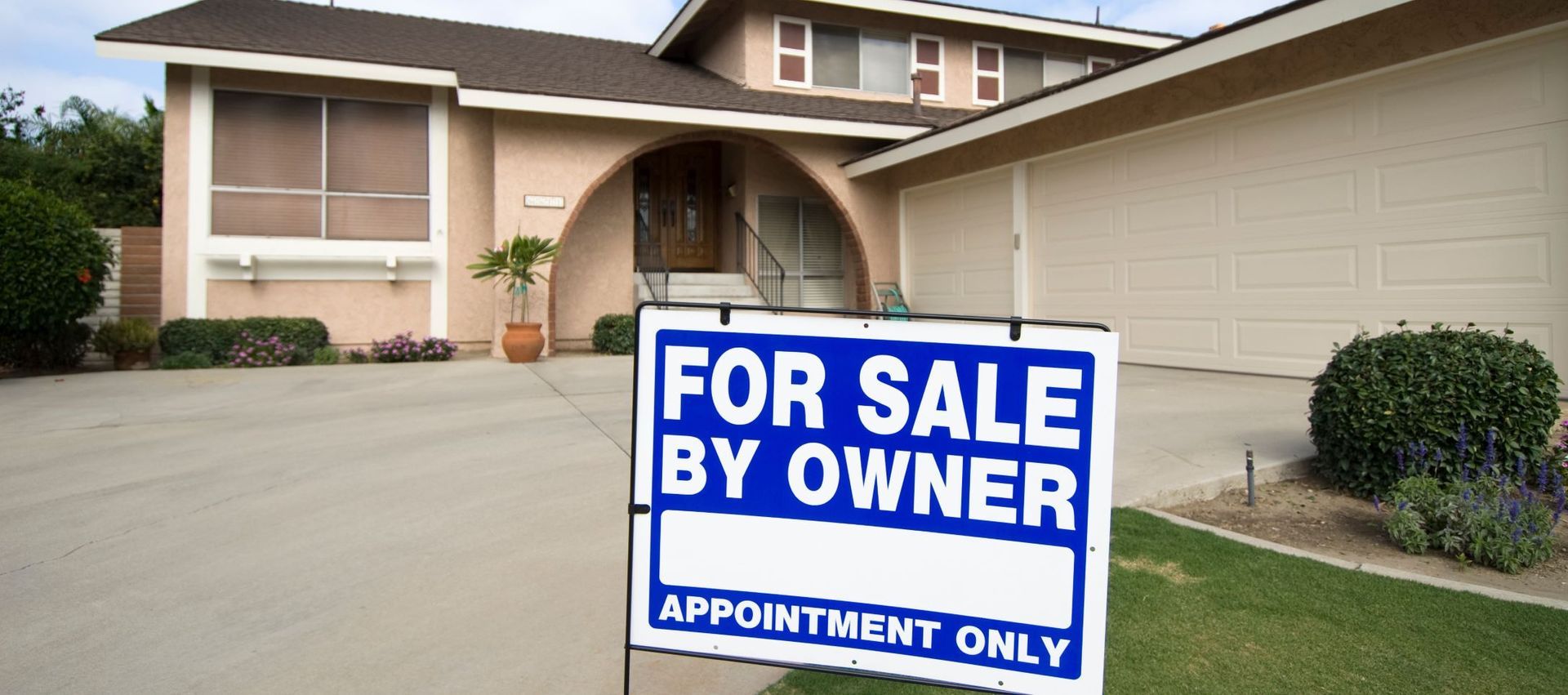
A house with a for sale by owner sign in front of it
By marcus March 9, 2024
Introduction In the adventurous journey of selling your home For Sale By Owner (FSBO), you might encounter a few bumps along the way. A report from the National Association of Realtors (NAR) shows that FSBOs accounted for 10% of home sales in 2021, indicating that successfully navigating this process requires careful planning. This post will guide you through the top home selling mistakes FSBOs often make and how you can avoid them. Mistake #1: Incorrect Pricing Pricing is a critical factor that can drastically impact your home sale. Overpricing might dissuade potential buyers, while underpricing may result in a financial loss. The NAR report reveals that the typical FSBO home sold for $225,000 in 2021 compared to $330,000 for agent-assisted home sales. This disparity underlines the importance of doing a thorough market analysis or considering an appraisal for the right pricing. Mistake #2: Poor Staging and Presentation According to the NAR’s Profile of Home Buyers and Sellers, the typical home purchased in 2022 was 1,800 square feet in size, built in 1986, and had three bedrooms and two bathrooms. Buyers have specific preferences, and how you present your home can significantly influence their decision. Proper staging and quality photographs are necessary to make your home appealing both online and in-person. Mistake #3: Inadequate Marketing Inadequate marketing can limit your pool of potential buyers. The NAR survey reveals that 51% of buyers found their home on the Internet, highlighting the need for a strong online presence. You can use social media, local listings, virtual tours, and the Multiple Listing Service (MLS) to get your property in front of potential buyers. Mistake #4: Ignoring Necessary Repairs Ignoring necessary repairs can negatively impact your sale. Buyers often overestimate the cost of repairs, and visible issues can deter potential buyers. By taking care of these problems before listing, you increase your chances of attracting buyers and getting your desired price. Mistake #5: Difficulty in Paperwork and Negotiations Selling a home involves dealing with complex paperwork and negotiations. The NAR report indicates that 13% of FSBO sellers found understanding and performing paperwork challenging. Moreover, negotiation skills are vital as the NAR report also shows FSBOs typically sold their homes for $105,000 less than agent-assisted sales in 2021. You may consider seeking legal advice or assistance from a real estate savvy friend to overcome this hurdle. Conclusion Selling your home as a For Sale By Owner (FSBO) can be profitable, but common mistakes could jeopardize the success of your sale. By avoiding these pitfalls – incorrect pricing, poor staging and presentation, inadequate marketing, ignoring necessary repairs, and issues with paperwork and negotiations – you’ll increase your chances of a successful and profitable home sale. References Highlights From the Profile of Home Buyers and Sellers. https://www.nar.realtor/research-and-statistics/research-reports/highlights-from-the-profile-of-home-buyers-and-sellers. Quick Real Estate Statistics – National Association of REALTORS®. https://www.nar.realtor/research-and-statistics/quick-real-estate-statistics. 2020 NAR Report: Breaking down For Sale by Owner (FSBO) homes. https://theamericangenius.com/housing/big-data/2020-nar-report-breaking-down-fsbo-homes/. If you are thinking of selling your own home, please give me a call and I can provide you with a For Sale by Owner guide, as well as potentially find a buyer for you. Call today, 719-820-4347
More Posts